
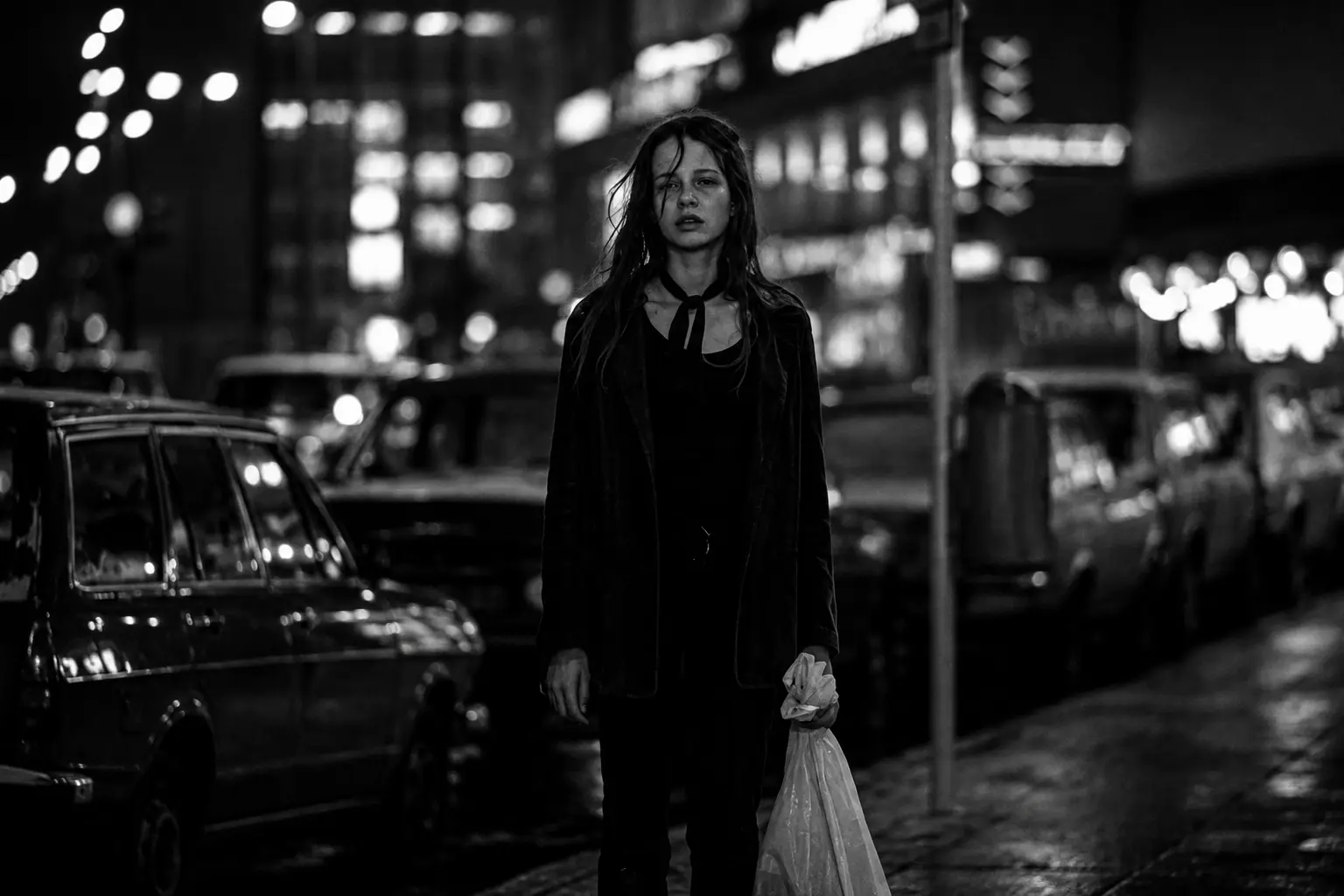
Berlin, 1978.
A divided city. Concrete, neon lights, train stations and underground clubs. West Berlin feels like an island surrounded by a wall — isolated, restless and alive.
Teenagers move through its nights looking for music, escape and somewhere to belong. David Bowie is part of the soundtrack. So are punk, post-punk and the sounds coming out of clubs like Sound.
Somewhere in this city, a young Christiane Felscherinow is growing up.
Her story would become one of the darkest portraits of European youth culture. But Christiane F. – Wir Kinder vom Bahnhof Zoo would also preserve something almost accidentally: a world in which subculture existed before it became an aesthetic, a marketing category or an algorithm.
Back then, style wasn’t something you searched for.
It was something you belonged to.
Before the Film, There Was the Book
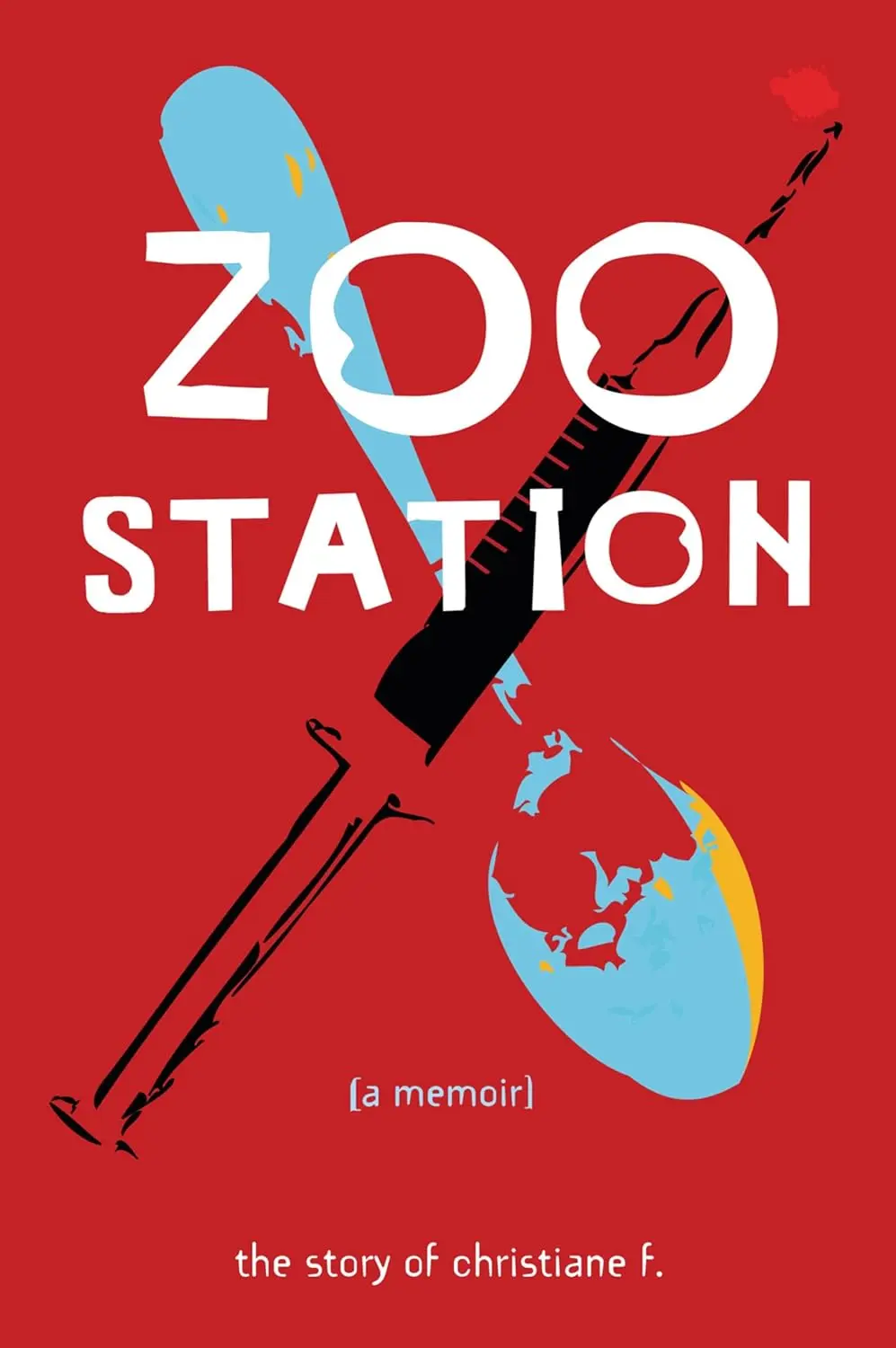
Before Christiane F. became a film, it was a book — and before it was a book, it was a real life.
Wir Kinder vom Bahnhof Zoo grew out of a series of interviews conducted by journalists Kai Hermann and Horst Rieck with Christiane Felscherinow, a teenager whose life had become inseparable from West Berlin’s drug scene. What was initially intended as a journalistic account became something far more powerful: the testimony of a generation growing up in the shadows of a divided city.
Published in 1978, the book was brutally direct. Christiane spoke about heroin, addiction, prostitution, friendship, music and the desperate need to belong without the comfortable distance of an adult looking back. It wasn’t a romantic portrait of underground Berlin. It showed what could happen when escape stopped being temporary.
The book became a cultural phenomenon in Germany and travelled far beyond it. Decades later, Wir Kinder vom Bahnhof Zoo has also found a place in German classrooms, where it has been used as educational reading to discuss addiction, adolescence and the social realities surrounding Christiane’s story.
Perhaps that is one reason it still feels so powerful today. Beneath the drugs and the darkness, the book is also about something timeless: young people searching for an identity in a world they don’t feel they belong to.
And in Christiane’s Berlin, music was one of the places where that identity could be found.
David Bowie was waiting on the other side.
From the Page to the Screen
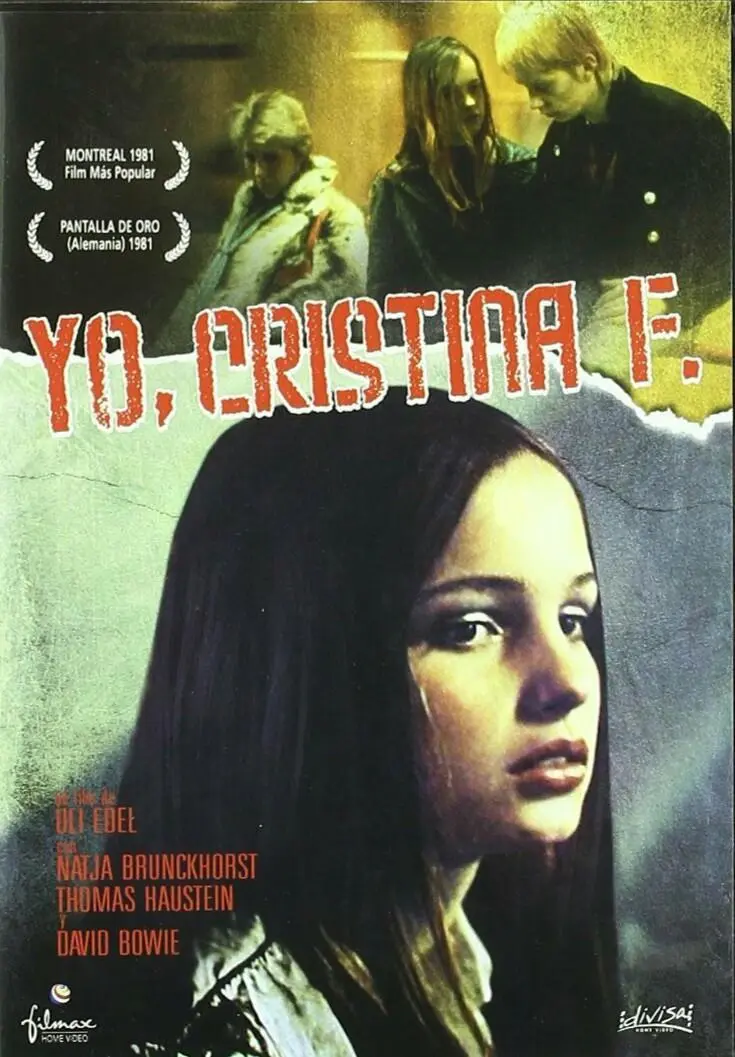
In 1981, Wir Kinder vom Bahnhof Zoo reached the cinema as Christiane F., directed by Uli Edel. But the film did more than adapt Christiane’s story. It captured a place and a moment in time that would eventually disappear.
West Berlin becomes almost another character in the film. Bahnhof Zoo, anonymous apartment blocks, underground stations, shopping streets and the legendary Sound club form the landscape through which Christiane and her friends move. The city feels cold and exciting at the same time — somewhere to escape from, but also somewhere to disappear into.
What makes the film so unsettling is that it rarely tries to make this world beautiful. The clothes, the music and the nightlife may now look fascinating through the distance of more than four decades, but the reality underneath them is devastating. Addiction destroys the freedom these teenagers thought they had found.
And yet the film unintentionally preserved something else.
It captured the way young people once built identity around places, music and people rather than around products. The club you went to, the records you listened to and the people you met could say more about who you were than any carefully constructed image.
There were no feeds documenting every night. No algorithm deciding what was underground. No endless catalogue of aesthetics waiting to be copied.
You had to be there.
And for Christiane, one figure seemed to exist above almost everything else.
David Bowie.
David Bowie and the Berlin Escape
By the time Christiane discovered David Bowie, he had already become something much bigger than a musician. For a teenager growing up in West Berlin, Bowie represented transformation — the possibility of becoming someone completely different from the person the world expected you to be.
And Berlin understood transformation better than most cities.
Bowie arrived there in the second half of the 1970s, searching for distance from fame, excess and the life he had been living in Los Angeles. Working alongside Brian Eno and Tony Visconti, he entered one of the most extraordinary creative periods of his career, forever associated with what became known as his Berlin Trilogy: Low, “Heroes” and Lodger.
Berlin wasn’t simply a backdrop. Its isolation, tension and divided geography became part of the atmosphere surrounding the music.
And then came “Heroes”.
Released in 1977, the song somehow transformed the Cold War landscape into something intimate and human. Against the presence of the Berlin Wall, Bowie imagined the possibility of two people finding a moment of freedom in a city built around separation.
For Christiane and thousands of young people like her, Bowie offered something equally powerful: the idea that identity didn’t have to be permanent.
You could change.
You could invent yourself.
You could escape — even if only for the length of a song.
That idea runs through almost every real subculture that followed. Music was never just something playing in the background. It could tell you where you belonged, introduce you to people you would never otherwise meet and give you a language for feelings you didn’t yet know how to explain.
Maybe that is why “Heroes” still feels immortal.
Not because it belongs to Berlin in 1977.
But because every generation eventually needs somewhere — or something — that makes them believe they can become someone else.
When Subculture Wasn’t an Aesthetic
There is something strange about watching Christiane F. more than forty years later.
The clothes, the haircuts, the clubs, the posters on bedroom walls — everything now looks like an aesthetic that could be carefully reconstructed for a fashion campaign. But for the people living inside that world, it wasn’t an aesthetic at all.
It was simply their life.
Subcultures weren’t downloaded overnight. They developed slowly through music, clubs, record stores, concerts, magazines, friendships and places where people actually met. You discovered something because somebody played you a record, because you saw someone outside a club, because you found a magazine or because you ended up somewhere you weren’t supposed to be.
And inevitably, those communities developed their own visual language.
The clothes came afterwards.
That distinction matters.
Today, the process can happen almost in reverse. An aesthetic appears on a screen already complete: the clothes, the soundtrack, the references, even the attitude. What once took years to develop inside a community can be identified, packaged and reproduced globally in a matter of weeks.
Punk becomes an aesthetic.
Rave becomes an aesthetic.
Goth becomes an aesthetic.
Even rebellion can become an aesthetic.
None of this means that culture was somehow more authentic simply because it happened before the internet. Every generation borrows, imitates and reinvents what came before it.
But something has changed.
We used to create styles because we belonged to something.
Now we can choose what to belong to because we like the style.
And somewhere between those two ideas lies one of the biggest contradictions in contemporary streetwear.
From the Underground to the Algorithm
The internet didn’t kill subculture.
In many ways, it did the opposite.
Someone living hundreds of kilometres from the nearest club can now discover an obscure Berlin producer, a tiny fashion label from Jakarta, a photographer in Tokyo or a record released twenty years before they were born — all in the same night.
That possibility is extraordinary.
But discovery now comes with a contradiction.
The same algorithms that help us find things outside the mainstream are constantly measuring what attracts our attention. And once something begins to resonate, it can be reproduced at extraordinary speed.
A silhouette becomes popular.
A particular pair of shoes appears everywhere.
A forgotten musical genre is rediscovered.
A subculture becomes a trend.
And suddenly thousands of people are being shown variations of the same thing while believing they are discovering something unique.
Fashion has always borrowed from the underground. What has changed is the speed. Something that once developed over years inside a small community can now travel from a club, a street or a bedroom to millions of screens almost overnight.
The underground doesn’t disappear.
It gets accelerated.
And perhaps that is why individuality feels increasingly difficult to protect.
When everyone has access to the same references, the same images, the same trends and the same recommendations, being different requires something surprisingly simple:
curiosity.
Looking beyond what appears first.
Listening beyond the playlist you were given.
Searching beyond the brands everybody already knows.
Because the algorithm can show you what is popular.
It can’t decide what matters to you.
Can Streetwear Still Be Independent?
Streetwear has always lived somewhere between culture and commerce.
The moment something underground becomes visible, somebody will eventually try to sell it. That isn’t new. What is new is how quickly individuality itself can become a product.
So perhaps the question isn’t whether streetwear can still be underground.
Perhaps the better question is whether we can still choose independently.
Independent doesn’t necessarily mean obscure. It doesn’t mean rejecting everything popular simply because it is popular. And it certainly doesn’t mean trying harder than everyone else to look different.
It means remaining curious.
Finding clothes, music, films, books and ideas because they genuinely mean something to you — not simply because they appeared often enough on your screen.
That idea sits quietly at the heart of Everybody Loves.
Not the promise of telling people what they should wear, what they should listen to or what they should think. Quite the opposite.
Everybody Loves was built around discovery: looking beyond the obvious, supporting independent creativity and bringing together fashion, music and culture without pretending that any of them exist separately.
Because personal style shouldn’t come with instructions.
And culture shouldn’t arrive as a complete package ready to consume.
More than forty years after Christiane walked through the streets and stations of West Berlin, the world around us has changed almost beyond recognition.
But perhaps the instinct that drives us hasn’t changed that much.
We are still looking for something that feels like ours.
Just for One Day
Maybe that is why we keep returning to stories like Christiane F.
Not because we want to romanticise the darkness surrounding them. There was nothing romantic about addiction, exploitation or the lives that were destroyed around Bahnhof Zoo.
We return because beneath that darkness there is something recognisable.
Young people searching for somewhere to belong.
Searching for music that feels like it was made specifically for them. For people who understand them. For clothes that somehow communicate something they cannot yet put into words.
The places change.
The music changes.
The clothes change.
The search doesn’t.
Christiane found Bowie in a divided Berlin. Others found punk, hip-hop, techno, rave or countless cultures that hadn’t even been named yet. Today, almost everything is instantly available to us — every record, every image, every reference, every aesthetic.
And perhaps that makes choosing for ourselves more important than ever.
Because discovering who you are was never supposed to be easy.
It was never supposed to come from a recommendation.
And it was never supposed to look exactly like everyone else.
More than four decades later, somewhere between the concrete of Bahnhof Zoo, the glow of a screen and the opening notes of a song recorded in Berlin, Bowie’s words still seem to reach across time:
“We can be heroes, just for one day.” — David Bowie, “Heroes”
Maybe one day is enough to begin.
Find your own music.
Find your own culture.
Find your own way.
Think for yourself.
Leave A Comment