
Kavinsky (1975–2026): The Soundtrack of Endless Night Drives
On July 29, 2026, the electronic music world lost one of its most distinctive voices. French producer Kavinsky, born Vincent Belorgey, was found dead at his home in Paris at the age of 50. French authorities have opened an investigation, with no suspicious circumstances reported in the initial findings.
For many people, Kavinsky was much more than a musician. He created an entire universe where neon lights, deserted highways, vintage sports cars and cinematic synthesizers became part of the same story. His music helped define the modern synthwave movement and inspired artists, filmmakers, photographers and designers around the world.
At Everybody Loves, this news has affected us deeply.
Our project has always been closely connected to electronic music and the culture that surrounds it. Independent fashion has never existed in isolation. It has always evolved alongside underground music scenes, skateboarding, cinema and contemporary art. Those influences are at the heart of our Journal, and few artists embodied that connection better than Kavinsky.
For us, tracks like Nightcall are more than iconic songs. They represent an aesthetic and a way of seeing the world that has inspired countless creatives over the past fifteen years. This article is our small tribute to an artist whose influence reached far beyond electronic music.
A Character Before an Artist
Unlike most producers, Kavinsky never presented himself simply as a DJ.
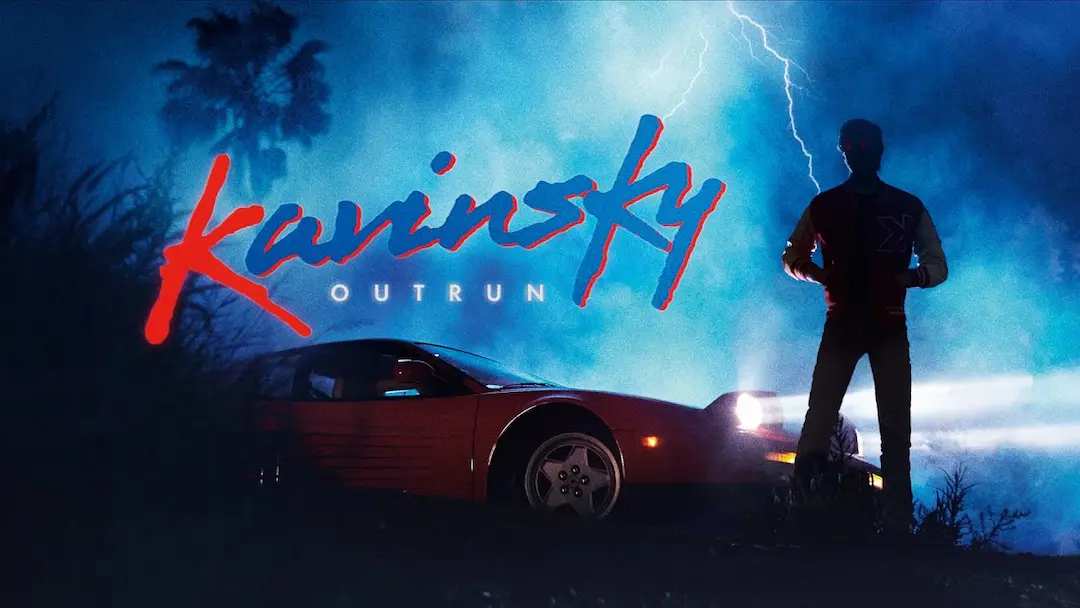
He created a fictional character inspired by 1980s action films and horror cinema. According to his own mythology, a young man crashed his Ferrari Testarossa in 1986 and returned from the dead to drive through endless neon-lit nights. That story became the foundation of his music and visual identity.
Every release felt like another chapter in that universe. Heavy analog synthesizers, retro drum machines and cinematic melodies transported listeners into a world that seemed suspended somewhere between the past and the future.
Long before synthwave became a global phenomenon, Kavinsky had already built one of its strongest identities. His sound wasn’t driven by nostalgia alone; it was modern, emotional and unmistakably his own.
The Song That Changed Everything
For millions of listeners, their first encounter with Kavinsky came in 2011 with the release of Nicolas Winding Refn’s film Drive.
The opening scene, accompanied by Nightcall, instantly became one of the most memorable moments in modern cinema. Cliff Martinez’s score and Kavinsky’s haunting production created an atmosphere that perfectly captured the lonely, neon-soaked world of the film.
Almost overnight, Nightcall introduced a new audience to synthwave and became one of the defining electronic tracks of the decade. More than fifteen years later, it remains his most recognisable work and continues to inspire musicians, filmmakers and designers across the world.
Beyond Nightcall: Five Essential Tracks
While Nightcall became the song that introduced Kavinsky to the world, reducing his career to a single track would overlook an incredible catalogue of music.
Over the years, he built a unique discography where every release expanded the universe he had imagined. Fast-paced instrumentals, dark melodies and cinematic production became his signature, influencing countless artists in electronic music and beyond.
If you’re discovering Kavinsky for the first time—or simply want to revisit his work—these are some of the tracks that best represent his legacy.
ProtoVision (2013)
Aggressive, energetic and unmistakably futuristic, ProtoVision is one of the standout tracks from OutRun. Its driving bassline and soaring synths perfectly capture the feeling of speeding through a neon-lit city at night.
The music video reinforces Kavinsky’s retro-futuristic universe, blending classic sports cars with the cinematic aesthetic that made his work instantly recognisable.
For many fans, ProtoVision represents the purest expression of the Kavinsky sound.
Roadgame (2010)
Released before OutRun, Roadgame showed that Kavinsky was already developing the signature sound that would later make him famous. Darker and more atmospheric than many of his later tracks, it captures the feeling of driving alone through empty streets, with only the glow of city lights cutting through the darkness.
The slow build-up, haunting melodies and cinematic pacing make it one of his most immersive compositions. Rather than chasing high energy, Roadgame creates tension through restraint, proving that Kavinsky understood how to tell a story without saying a single word.
Even today, it remains a favourite among long-time fans and perfectly represents the mysterious world he created.
Testarossa Autodrive (2007)
If there is one track that perfectly defines Kavinsky’s fictional universe, it is Testarossa Autodrive.
Named after the Ferrari Testarossa that became central to his mythology, the track is raw, mechanical and hypnotic. Its repetitive synthesizer lines and relentless rhythm evoke the sensation of an endless night drive through a futuristic city.
Long before synthwave exploded in popularity, Testarossa Autodrive was already laying the foundations for the genre. Its influence can still be heard in countless electronic artists who followed.
More than just a song, it became part of the identity that made Kavinsky one of the most recognisable names in modern electronic music.
Odd Look (2013) feat. The Weeknd
One of the most surprising moments in Kavinsky’s career came with Odd Look. Originally released as an instrumental on OutRun, the track gained a new dimension when Canadian artist The Weeknd added his unmistakable vocals.
The collaboration introduced Kavinsky’s music to a much wider audience without sacrificing the atmosphere that had made his work so distinctive. The combination of melancholic synths, dreamy production and The Weeknd’s voice created a song that blurred the line between synthwave, electronic music and modern pop.
More than a decade later, Odd Look remains one of Kavinsky’s most accessible and emotionally powerful recordings, proving that his sound could evolve while staying true to its roots.
Renegade (2022)
After nearly ten years without releasing a full album, Kavinsky returned with Reborn, proving that his music had lost none of its magic. Renegade, featuring Cautious Clay, became one of the album’s defining tracks.
Instead of simply recreating the past, Kavinsky refined his signature style. The production felt cleaner and more mature, while still retaining the dark, cinematic atmosphere that had always defined his work.
Renegade demonstrated that Kavinsky wasn’t interested in chasing trends. He remained faithful to the universe he had created years earlier, showing that timeless music doesn’t need to reinvent itself to stay relevant.
For many fans, Reborn was more than a comeback—it was confirmation that Kavinsky’s vision still had plenty to offer a new generation of listeners.
A Catalogue Worth Rediscovering
Of course, no article can fully capture everything Kavinsky created over the years.
Tracks like Roadgame, Rampage, First Blood, Pacific Coast Highway, Dead Cruiser, Blizzard, Grand Canyon and Renegade all reveal different sides of his musical identity. Some are darker and more cinematic, others more aggressive or melodic, but they all share the unmistakable atmosphere that made his work instantly recognisable.
Whether through the raw energy of his early EPs, the polished production of OutRun, or the mature sound of Reborn, Kavinsky remained remarkably consistent. Rather than chasing trends, he built his own universe and invited listeners inside it.
His music wasn’t simply meant to be heard—it was meant to be experienced. Empty roads, glowing city lights, vintage sports cars and late-night reflections became recurring images in the minds of millions of listeners around the world.
For many fans, discovering Kavinsky was the beginning of a journey into synthwave, French electronic music and an entire visual culture that continues to inspire artists today.
A Legacy That Will Never Fade
Some artists leave behind great albums.
Others leave behind a feeling.
Kavinsky belonged to the second group.
His music captured something difficult to describe but instantly familiar: the sensation of driving through the city after midnight, when the streets are almost empty and the lights blur into endless reflections. It was nostalgic without looking backwards, futuristic without losing its soul.
At Everybody Loves, we have always believed that music, fashion and visual culture are deeply connected. Kavinsky’s work perfectly represented that connection. His influence reached far beyond electronic music, shaping aesthetics that continue to inspire photographers, filmmakers, designers and independent brands around the world.
Although his career has come to an unexpected end, his music will continue to accompany countless night drives, film soundtracks and moments of inspiration for years to come.
Thank you for the music, the atmosphere and the unforgettable world you created.

Leave A Comment