

From ’90s Indie Cinema to Clothing: How ’90s Indie Cinema Inspired Wasted Paris Streetwear’ DNA
If you take a look at Wasted Paris’ catalog, it’s pretty clear the brand doesn’t get its inspiration from traditional haute couture runways. Their style comes from somewhere else. It comes from skate videos recorded on VHS, the raw noise of amplifiers, and, above all, that ’90s independent cinema that left your stomach turning.
We’re talking about an era when directors like Larry Clark or Gus Van Sant bypassed Hollywood filters, choosing instead to shove their cameras into the suburbs to capture a nihilistic, slightly lost, and brilliantly authentic youth. Three decades later, that same visual rawness is the creative fuel for the Parisian brand.
The Dirty Realism of Larry Clark and NYC’s “Skate Rats”
It’s impossible to understand modern streetwear without Kids (1995). The film, directed by Larry Clark and written by a very young Harmony Korine, didn’t use professional actors; it featured real kids skating the streets of New York City.
What was their uniform? Graphic tees from local brands that only a handful of people knew at the time, iconic baggy jeans thrashed by skateboard griptape, faded beat-up caps, and sneakers held together by duct tape. Later on, Clark repeated this uncomfortable formula of gritty realism in Bully (2001) and Ken Park (2002), cementing the aesthetic of the suburban outsider who couldn’t care less about society.
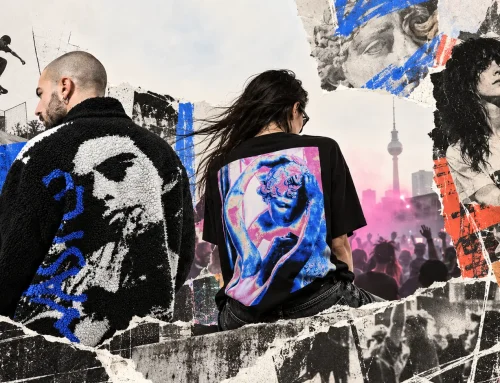
Wasted Paris was born in 2012 out of this exact skateboard subculture. You won’t find pristine, flawless items in their collections—everything has an intentionally worn-in vibe. Their acid-wash baggy jeans, oversized hoodies with aggressive gothic typography and distressed t-shirts look like they were pulled straight from the closets of the Kids cast. It’s clothing made for the concrete, not the display window.
Gus Van Sant’s Grunge Melancholy and Road Trip Style
Before flannel shirts became a mass-market trend, Gus Van Sant was already using them to tell stories of broken characters living on the margins of America. His ultimate masterpiece, My Own Private Idaho (1991), is probably one of the most influential style catalogs in cinema history, thanks to the gear worn by River Phoenix and Keanu Reeves.
The film’s style is all about survival and the open road: heavy-duty canvas work jackets in earthy tones, endless layering (open plaid shirts over basic white tees), and that legendary red jacket with a corduroy collar worn by Phoenix.
That sense of melancholy and distressed workwear heavily inspires Wasted Paris’ Fall/Winter drops. The brand nails that “drifter” aesthetic by utilizing quilted flannel overshirts, technical utility jackets with patches that emulate worn-out work clothing, and distressed knit sweaters with loose threads that look like gems rescued from a thrift store bin.
The Death of Mass-Market Streetwear: Why We Urgently Need to Return to the Roots
Let’s be honest: modern streetwear is going through a massive identity crisis. What was born in back alleys, skateparks, and underground clubs has been swallowed whole by mainstream commercialism. Today, luxury mega-corporations design thousand-dollar hoodies, massive logos have replaced actual design, and everything seems tailored exclusively to chase Instagram likes or go viral on TikTok.
Streetwear has become predictable, safe, boring, and, above all, absurdly clean. It has lost its danger. When everyone is wearing the exact same resale sneaker and the same drop-shipped brand hoodie, clothing stops being a symbol of rebellion and becomes a uniform of conformity.
That’s why looking back at the cinema of Larry Clark or Gus Van Sant isn’t just a nostalgic trip; it’s a necessity. We need to go back to the roots because that’s where the truth of this movement lives: in the imperfections, in the clothes that rip because you actually skate in them or crash a mosh pit, and in the attitude that you don’t give a damn about what’s trending at the mall.
Brands like Wasted Paris hold their ground precisely because they’d rather align themselves with the uncomfortable, bizarre look of Gummo (1997) than with the polished aesthetic of a traditional Parisian runway. Wearing these pieces works because it connects you to an analog era when youth culture was dangerous, free, and a bit wild. In the end, it’s about deciding whether you want to be a clone of an algorithm or wear a still frame from a cult movie.
Leave A Comment