
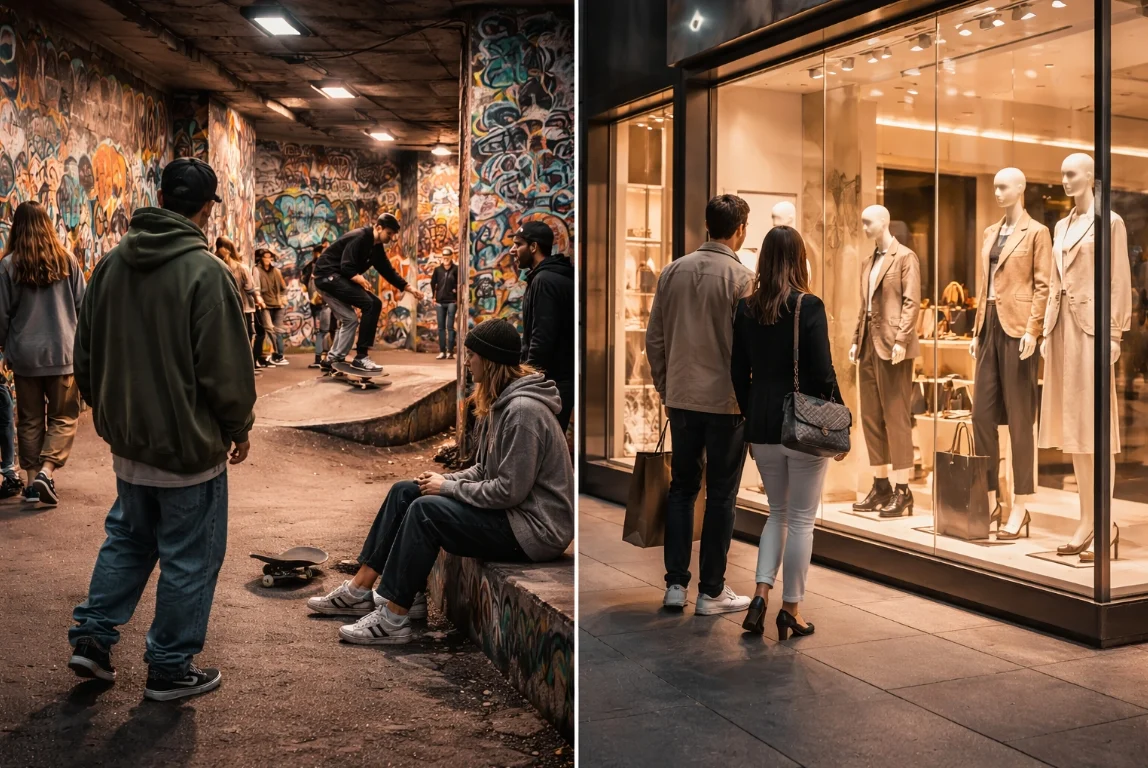
When people talk about streetwear vs mainstream fashion, they are often referring to two very different ways of understanding clothing. One is rooted in culture, identity and community. The other is largely driven by seasonal trends, mass production and global retail cycles.
Streetwear was never just about clothes. It emerged from youth culture, music scenes, skateboarding, graffiti and underground creativity. Mainstream fashion, on the other hand, follows a more traditional structure shaped by large fashion houses, global brands and seasonal collections.
Understanding the real difference between these two worlds helps explain why streetwear continues to influence fashion globally while maintaining its rebellious and independent spirit.
The origins: culture vs industry
One of the clearest differences in streetwear vs mainstream fashion lies in how each movement started.
Streetwear grew from the streets
Streetwear emerged during the late twentieth century from communities connected to skateboarding, hip-hop, punk and underground art scenes. Clothing became a visual language for belonging to a culture.
Designs were often created by small independent brands or local creatives who produced limited runs rather than large collections. These pieces were not just garments; they represented identity, attitude and community.
Mainstream fashion grew from the fashion system
Mainstream fashion follows a structured industry model. Major brands release seasonal collections that appear in global retail networks, magazines and fashion weeks.
This system is built around trends that change frequently, encouraging consumers to update their wardrobes every season.
Identity vs trends
Another major difference between streetwear vs mainstream fashion is the relationship between clothing and personal identity.
Streetwear as self-expression
Streetwear encourages individuality. Oversized silhouettes, graphic hoodies, statement jackets and sneakers are often mixed in ways that reflect personality rather than strict fashion rules.
Many people who wear streetwear see clothing as an extension of their mindset, music taste and cultural influences.
Mainstream fashion as seasonal style
In mainstream fashion, the focus often revolves around current trends. Colors, cuts and fabrics shift every season, and large brands push these changes through marketing campaigns and retail channels.
While personal style still matters, the overall system is designed around trend cycles rather than cultural expression.
Limited drops vs mass production
One of the most visible aspects of streetwear vs mainstream fashion is how garments reach the market.
The power of limited drops
Streetwear brands frequently release small collections or limited drops. These launches create anticipation within the community and reinforce the idea that each piece is part of a specific cultural moment.
Because quantities are limited, items often feel more special and personal to the people who buy them.
Global mass production
Mainstream fashion relies heavily on large production runs and global distribution. This allows brands to reach a wide audience but can also reduce the sense of exclusivity.
Consumers often find the same items across multiple stores and regions.
Community vs mass audience
Streetwear communities tend to form around shared interests such as music, art, skate culture or independent creativity. Events, pop-ups and collaborations strengthen these connections.
Mainstream fashion brands usually address a much broader audience. Their campaigns are designed to appeal to large demographics rather than specific subcultures.
This difference shapes how people interact with each style.
Why streetwear continues to influence fashion
Despite being born outside traditional fashion systems, streetwear now influences almost every corner of the industry.
Luxury brands collaborate with streetwear designers, sneakers dominate global fashion markets and oversized silhouettes appear in high-end collections.
Yet the core difference in streetwear vs mainstream fashion still exists. Streetwear remains deeply connected to culture and community, while mainstream fashion continues to operate through global trend cycles.
A curated approach to streetwear
Because streetwear is strongly tied to identity and culture, the way it is curated and presented also matters. Some retailers simply sell clothing, while others approach streetwear as a cultural movement.
EveryBody Loves is an example of the second approach. Instead of functioning as a generic online clothing store, the platform curates urban fashion with a strong underground identity.
The selection focuses on independent labels, emerging designers and limited collections that often exist outside mainstream retail channels. This reinforces the idea that streetwear is more than a trend; it is part of a broader creative scene linked to music, art and urban culture.
By highlighting brands with personality and drops that feel unique, the store reflects the real spirit behind streetwear culture.
Streetwear as a long-term movement
Looking at the evolution of streetwear vs mainstream fashion, it becomes clear that both worlds serve different purposes.
Mainstream fashion provides accessibility and global visibility. Streetwear offers authenticity, community and cultural relevance.
For many people, the appeal of streetwear lies precisely in that difference. It allows individuals to express themselves without following the same patterns everyone else is wearing.
That spirit of independence is what keeps streetwear alive and constantly evolving.
Buy here.
Leave A Comment